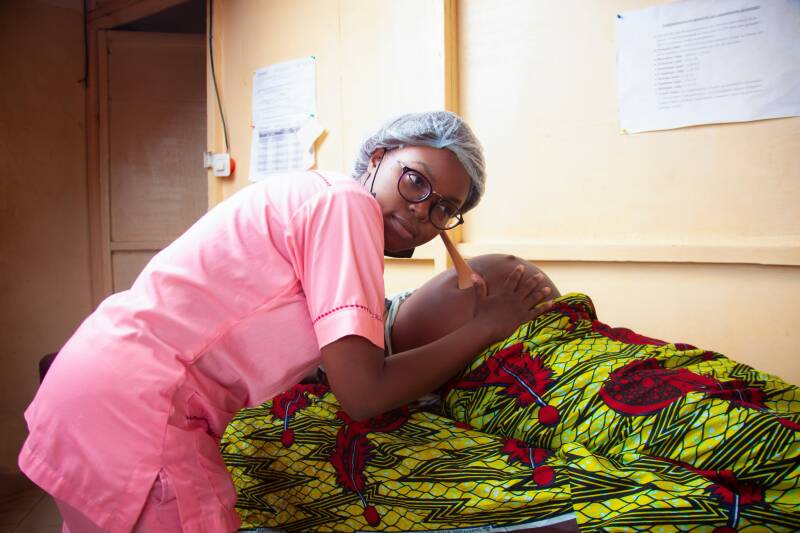

This is something that comes up in conversation a lot. So let's get into 3 differences as I understand them:
Employment
On the whole, midwives are employed by NHS trusts* and deliver their services as Community, Hospital or Home Birth midwives. As a pregnant person you might, if you're lucky, get to know one midwife well, but more often than not in the 2020's you will see multiple midwives for the duration of your antenatal care and you are likely to meet different midwives again for your labour and birth care. Continuity of Care by a midwife is a rarity at the moment.
Doulas on the other hand are largely self-employed and once you have hired one they work only for you. Every doula is unique, has their own skill set, and reason for being a doula. Their different life experiences and passions drive how they work and present to you their potential client. Some are a bit woo, some are pragmatic and practical, some like me fall somewhere between the two. You will know when you've met YOUR doula! You may hire one doula or sometimes two in a shared care arrangement, and you will receive continuity of care throughout your pregnancy, labour and birth from your doula(s)
Education
In the UK midwifery is a protected function in the UK, meaning that it is a criminal offence for any person other than a regulated midwife or a registered medical practitioner to attend a woman in childbirth, except in emergencies or when training as a student midwife or medical practitioner.** The midwifery regulator is the Nursing and Midwifery Council (NMC) who set standards for midwives; create and manage a midwifery code of conduct and ensure a revalidation process so that all practicing midwives (including independent midwives) are up to date with their knowledge and skills.
Midwives are educated to degree level often at university and then when employed after graduation enter a preceptorship phase where their practice is evaluated and education continued within the employing NHS trust.
Doulas do not have any such regulatory or protected status. In theory anyone can say that they are a doula and start offering doula services but in practice, in the UK most will undertake some sort of preliminary training course followed by a period of supported practice where they are mentored by more experienced doulas. There are many doula training organisations around the UK, some of which are affiliated with Doula UK, an organisation you might have heard of. Doula UK is a membership organisation and does validate the content of affiliated courses and the standards which should be attained by prospective doulas, but doulas do not have to be a member of Doula UK to practice and indeed there are other UK based directories of doulas such as Abuela Doulas and Developing Doulas***. Most doulas will continue their own development and education (Continuous Professional Development) as they gain more experience.
Mission
Midwives are educated to be experts in pregnancy and childbirth. They are trained to recognise when pregnancy, labour or birth deviate from "normal" and to intervene or refer to medical support if needed. They are expected to provide evidence-based information to the pregnant people in their care and support them to make informed individualised decisions. As already discussed most midwives are employed by NHS trusts and are therefore also expected to follow those trusts' guidelines and procedures. In practice these can often be seen to be at odds with supporting individualised decisions and there is often tension if a woman wants something outside of the preferred guideline - a phrase you might hear called Out of guidance (OOG). Trust midwives, particularly ante-nataly are also often time poor and lack the time to go in to all the evidence, the pros and cons of particular pathways of care for every woman they see. This can present as coercion at worst, or weak explanations at best.****
Doulas believe in physical and emotional autonomy. They may well also believe that all women are designed to give birth BUT their principle goal is to support the woman or birthing person to make the right decisions for them, with all the information they need to make that decision and provide truly informed consent. Your doula will be by your side whatever your decision and whenever you make that decision. Doulas support all types of births from Free births***** to Caesarean births and all the variations in between.
Obviously midwives complete medical procedures and observations in which they are trained, for example listening to the fetus's heart rate, vaginal examinations, injections, stitches and so on. Doulas do not and can not do any of this. A doulas role is to provide physical, emotional and informational support. So a doula might offer physical touch to alleviate labour discomfort, or remind the birthing person to breath in the way they've practiced to reduce stress. They might also advocate for the family, making sure that birth plans and preferences are read and observed by the medical team, sometimes they might be the first point of contact between the birthing family and the medical team if that family's preference is that they want to remain unobserved and as untouched as possible. You get the picture I hope. You can read a bit more about what a doula does here.
Conclusion
There are other ways that midwives and doulas differ, I've tried to concentrate on just three. But on the whole our roles compliment each other. Doulas certainly can't do their jobs without midwives, and I hope that my presence in the room supports the midwife also. Within the current state of maternity services (which is in no way the fault of individual midwives) Continuity of care, the A* standard of care PROVEN to improve maternal and neonatal outcomes is practically non-existent from midwives. If you want a bit of that in your pregnancy and birth experience then you need to hire a doula!
*There is an exception to this. In the UK there are also independent midwives (sometimes called Private midwives) these are fully qualified midwives who are also self-employed, and who are therefore instructed by you. You will receive continuity of care throughout your pregnancy, labour and birth, if you hire an independent midwife, but they can feel expensive and beyond the reach of many pregnant people.
**https://www.nmc.org.uk/about-us/our-role/who-we-regulate/midwifery/
*** I'm in this directory
**** Not all midwives, but this IS a common observation
*****Not all doulas! If you are investigating a free-birth you will need to interview your doulas carefully and remember that they are not able to intervene or advice in the case of an obstetric emergency.